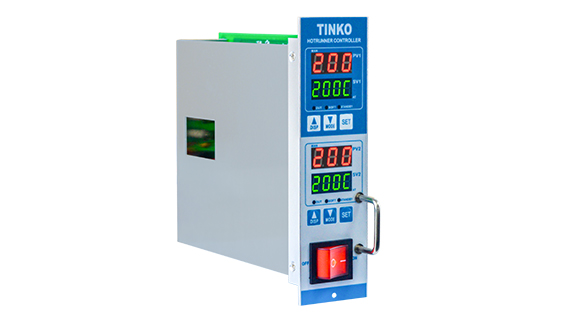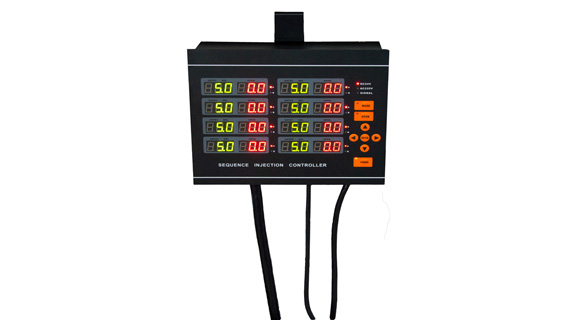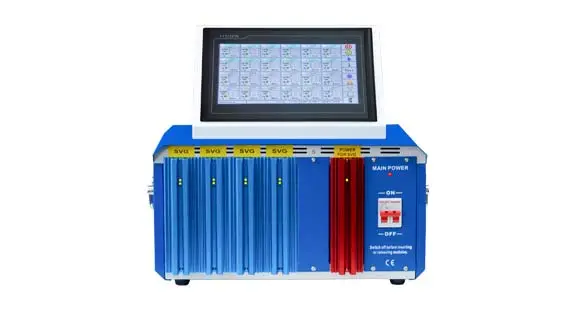
For precision injection molding, sequential valve gate control offers a level of timing and melt-flow management that conventional hot runner temperature control alone cannot provide. The key difference is that sequential systems actively control when individual valve gates open and close, allowing molders to manage filling sequence, weld lines, pressure distribution, and part appearance. Traditional hot runner controller systems primarily regulate temperature and cannot independently control melt flow unless combined with a valve-gate sequencing system.
A sequential valve gate system controls individual valve gates according to a predefined opening and closing sequence during the injection cycle. Instead of allowing all gates to operate simultaneously, the controller coordinates each gate based on injection position, time, pressure, or other process signals.
This gives molders greater control over how the melt moves through the cavity. Gates can be opened progressively to direct the melt front, reduce pressure peaks, and influence where flow fronts meet.
This approach is particularly useful for large parts, multi-gate molds, automotive components, and applications where visible weld lines or dimensional variation must be minimized.
Traditional hot runner controller systems are primarily responsible for maintaining stable temperatures throughout the hot runner manifold and nozzle zones.
Each heating zone typically has a thermocouple for temperature measurement and a control loop that adjusts heater output. Stable temperature is essential because excessive temperature variation can affect melt viscosity, filling behavior, degradation, and part consistency.
However, temperature control and flow control address different aspects of the molding process. A temperature controller can maintain the thermal condition of the hot runner, but it does not determine the precise moment at which a valve gate opens.
For this reason, demanding applications may use temperature control together with dedicated valve-gate sequencing.
Gate timing determines how different portions of a cavity are filled. When multiple gates open simultaneously, melt fronts may collide in locations that create visible weld lines or undesirable pressure distribution.
With sequential valve gate control, the mold designer can establish a filling sequence that changes the position and timing of these flow fronts.
For example, one gate can initiate filling while another remains closed. Once the melt reaches a suitable position, the next gate opens and continues the filling process. This can help balance cavity filling and reduce certain flow-related defects.
The exact sequence should be developed according to the mold geometry, resin characteristics, gate locations, and required part quality rather than simply applying the same timing pattern to every mold.
It can help control the location and formation of weld lines, but it does not automatically eliminate them.
Weld lines occur when separate melt fronts meet and fail to fuse sufficiently. Their position depends on gate layout, injection conditions, material properties, mold temperature, and part geometry.
A sequential valve gate allows molders to influence where and when melt fronts meet. By changing the opening sequence, the meeting point can sometimes be moved away from visible or structurally sensitive areas.
However, gate sequencing should be considered together with mold design, processing temperature, injection speed, and material selection.
The two systems serve different purposes rather than being direct substitutes.
Traditional hot runner controller systems provide precise thermal management. They are essential when stable nozzle and manifold temperatures are required throughout production.
Sequential valve-gate control adds precise flow management. It becomes particularly valuable when the molding challenge involves multiple gates, complex cavity filling, visible surfaces, or strict dimensional requirements.
For many advanced molds, the most effective configuration is therefore a combination of accurate hot runner temperature control and synchronized valve-gate sequencing.
A sequential valve gate system is worth considering when conventional simultaneous gating creates process limitations.
Typical applications include large automotive panels, large-area injection molded components, multi-gate precision parts, transparent components, and products with demanding cosmetic surfaces.
It can also be useful when manufacturers need better control over injection pressure or want to coordinate mold filling with machine signals.
For relatively simple molds with one or a small number of gates, the additional sequencing capability may not provide enough process benefit to justify greater system complexity.
The controller should be selected according to both the thermal and control requirements of the mold.
Important considerations include the number of temperature zones, temperature-control accuracy, PID performance, thermocouple compatibility, heater load, alarm functions, and communication capability.
If the application uses valve gates, manufacturers should additionally consider the required number of gate outputs, timing resolution, triggering method, and compatibility with the injection molding machine and mold configuration.
A well-designed control system should make process adjustments practical for production engineers rather than simply adding more parameters to the interface.
Temperature stability provides the thermal foundation for consistent valve-gate operation. If the melt temperature varies significantly between zones, changes in viscosity can affect the result of an otherwise precisely timed gate sequence.
The two control functions should therefore be coordinated:
Temperature control maintains consistent melt conditions.
Valve-gate sequencing manages the timing and direction of melt flow.
Together, they give manufacturers greater control over the complete filling process than either function can provide independently.
Traditional hot runner controller systems remain fundamental to stable injection molding because consistent temperature directly affects melt behavior and process repeatability. However, temperature control alone cannot manage the timing of individual gates.
A sequential valve gate system adds another level of process control by coordinating gate operation throughout cavity filling. For complex, multi-gate, large-format, or appearance-critical components, this additional control can help manage weld lines, pressure distribution, and filling behavior.
The appropriate solution depends on mold geometry, material, gate configuration, production requirements, and the level of process control required. In advanced injection molding, combining stable hot runner temperature control with accurate valve-gate sequencing can provide a more complete approach to precision molding.
It provides precise control over when individual gates open and close during cavity filling.
A conventional temperature controller primarily manages heating zones. Valve-gate sequencing generally requires dedicated control functions.
They can help control weld-line location and reduce their impact, but they cannot guarantee complete elimination.
No. Their benefits are most relevant to complex multi-gate molds and applications requiring greater filling control.
Yes. Stable temperature control and coordinated gate sequencing can complement each other in advanced injection molding applications.
 English
 français
 Deutsch
 Español
 italiano
 русский
 português
 العربية
 Türkçe
 dansk
dansk Svenska