Selecting a temperature controller for injection molding should start with the mold's thermal requirements rather than the controller's advertised maximum temperature. Manufacturers need to match the controller to the required temperature range, heating and cooling load, circulation flow, pressure, control accuracy, mold configuration, and production cycle. For hot runner applications, the number of controlled zones and thermocouple configuration are equally important.
For manufacturers evaluating a temperature controller China supplier, these technical factors should be considered alongside controller reliability, customization capability, spare-parts availability, and after-sales support.
The required operating temperature is the first specification to establish. Different plastics and mold designs place very different demands on temperature control.
Standard thermoplastics may work well with conventional water-based temperature control, while engineering plastics and high-temperature applications can require pressurized water or oil-based systems. The controller should cover the highest required operating temperature with sufficient control margin rather than operating continuously at its maximum rating.
For hot runner molds, the temperature requirement is determined not only by the mold itself but also by the processing temperature of the resin and the thermal characteristics of the manifold, nozzle, and gate system.
Heating capacity determines how quickly the system reaches the required temperature and how effectively it recovers from thermal disturbances. Cooling capacity becomes particularly important when the mold must remove substantial heat between injection cycles.
An undersized controller may eventually reach the target temperature but struggle to maintain it during continuous production. This can increase cycle time and create temperature fluctuations that affect part consistency.
Manufacturers should therefore evaluate both heater power and cooling capacity based on:
Mold size and thermal mass
Resin type and processing temperature
Shot weight and cycle time
Required startup time
Heat generated during continuous production
Available factory cooling-water conditions
Temperature controller selection guides similarly emphasize heater load, cooling requirements, and process flow when sizing a temperature control unit.
Temperature control performance depends heavily on how effectively the heat-transfer medium circulates through the mold.
A controller with high temperature accuracy but insufficient flow may still produce uneven mold temperatures. The pump must provide enough flow and pressure to overcome resistance from cooling channels, hoses, fittings, filters, and other components in the circuit.
For complex molds, engineers should consider the total flow required by all cooling circuits and the pressure drop across the system. Injection molding simulation can also provide useful flow-rate and pressure data for matching a controller to the actual mold circuit.
This is especially important for molds with narrow channels, long circulation paths, multiple circuits, or significant differences in channel resistance.
The choice between water and oil depends primarily on the required operating temperature and heat-transfer characteristics.
Water systems are widely used for conventional injection molding because water provides efficient heat transfer and fast heating and cooling response. Pressurized water can also support applications requiring temperatures above the normal boiling point of water.
Oil systems are generally considered when substantially higher operating temperatures are required. They can be suitable for high-temperature engineering polymers and specialized molding processes, but they introduce different requirements for fluid maintenance, sealing, and thermal management.
The correct choice should therefore be based on the actual processing window rather than simply selecting the system with the highest temperature rating.
Temperature stability directly affects molding consistency. Variations in mold or hot runner temperature can influence filling behavior, shrinkage, warpage, surface appearance, and dimensional accuracy.
For applications with tight dimensional tolerances or demanding surface requirements, manufacturers should examine more than the controller's nominal temperature range. Important specifications include sensor accuracy, PID control performance, response to load changes, temperature overshoot, and long-term stability.
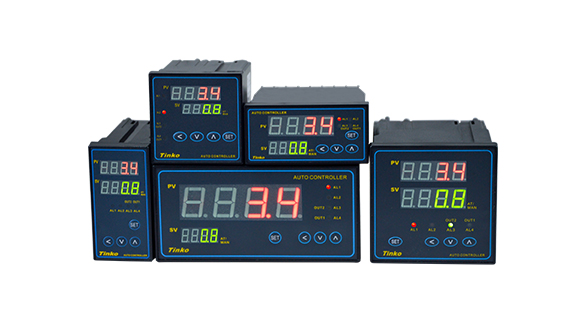
A well-designed PID temperature controller continuously compares the measured temperature with the target value and adjusts output accordingly. Tinko's hot runner temperature control modules, for example, use PID-based control and are designed to maintain consistent temperature control in injection molding applications.
The number of zones should correspond to the thermal structure of the mold or hot runner system.
A simple mold may require only a limited number of independently controlled zones. A complex hot runner mold, however, may need individual control of multiple manifolds, nozzles, and other heating sections.
Independent zones allow manufacturers to compensate for differences in thermal load and maintain more consistent processing conditions. For example, Tinko's M20-S touch-screen controller supports up to 32 temperature control zones and provides functions such as PID auto temperature control, zone identification, and communication interfaces.
When selecting a controller, manufacturers should therefore consider not only the number of zones required today but also whether future molds may require additional capacity.
Modern injection molding operations increasingly require temperature controllers to integrate with production monitoring and automation systems.
Useful functions can include:
PID temperature control
Automatic tuning
Temperature and output monitoring
Over-temperature protection
Sensor-failure alarms
Data recording
Remote monitoring
Industrial communication interfaces
For automated production environments, communication capability can be particularly valuable because temperature data and alarms can be incorporated into a wider machine-control or factory-monitoring system.
Price should not be the only consideration when sourcing from a temperature controller China manufacturer. The supplier's engineering capability can have a direct impact on controller performance and long-term maintenance.
Manufacturers should evaluate whether the supplier can provide suitable specifications for the mold, customize zone numbers or electrical configurations when required, supply compatible thermocouples and cables, and provide technical support after installation.
It is also useful to check the supplier's experience in injection molding rather than relying only on general temperature-control experience. Tinko Instrument, for example, has specialized in temperature controllers and hot runner control systems for the plastic injection molding industry since 2001.
Several selection mistakes can reduce the performance of an otherwise suitable molding system.
One common mistake is choosing a controller based only on its maximum temperature. A higher temperature rating does not compensate for insufficient heating power, cooling capacity, or pump performance.
Another is ignoring the mold's actual flow and pressure requirements. A controller must be able to circulate the heat-transfer medium through the complete circuit under production conditions.
Manufacturers should also avoid selecting a controller with exactly the required number of zones and no room for future expansion. For frequently changing production programs, additional zone capacity and flexible control functions can simplify future mold integration.
Selecting a temperature controller for injection molding requires a complete view of the thermal process. Temperature range, heating and cooling capacity, pump flow, pressure, control stability, number of zones, communication functions, and supplier support all influence the final decision.
For manufacturers sourcing a temperature controller China supplier, the most reliable approach is to provide the controller manufacturer with actual mold and process data before purchasing. Matching the controller to the thermal load and circulation requirements can help maintain stable molding conditions, reduce process variation, and support consistent production quality.
It maintains the required temperature of the mold or hot runner system by regulating heating and cooling.
Water is commonly used for standard temperature ranges, while oil is generally selected for higher-temperature applications.
Consider mold thermal mass, resin, target temperature, shot weight, cycle time, heating requirements, cooling load, and circulation flow.
Adequate flow allows heat to transfer efficiently through the mold and helps maintain a more uniform temperature.
The required number depends on the mold or hot runner design and how many areas need independent temperature regulation.
 English
 français
 Deutsch
 Español
 italiano
 русский
 português
 العربية
 Türkçe
 dansk
dansk Svenska