In today's competitive manufacturing landscape, precision and efficiency are essential for profitability and quality. One of the most critical components in injection molding systems is the hot runner temperature controller. Temperature instability or poor control can lead to defects, wasted material, and production disruptions. With expanding demand for high-performance molding solutions, the hot runner temperature controller market continues to grow rapidly, driven by innovations in digital control, energy efficiency, and adaptive process management.
As a leading provider of advanced temperature control solutions, Tinko has been at the forefront of helping manufacturers across industries leverage precise thermal regulation for superior output. This article explores key applications of hot runner temperature controllers in major injection molding sectors and why selecting the right controller can make a measurable difference in both product quality and operational efficiency.
The automotive industry represents one of the largest and most demanding markets for injection molded parts. From interior trims to under-hood components, today's vehicles incorporate complex plastic parts that require strict dimensional accuracy and material performance.
A hot runner temperature controller plays a vital role in automotive injection molding by ensuring uniform melt flow and temperature distribution across multiple cavities. Inconsistent temperatures can result in short shots, warpage, or weak spots — issues that are unacceptable in safety-critical automotive parts.
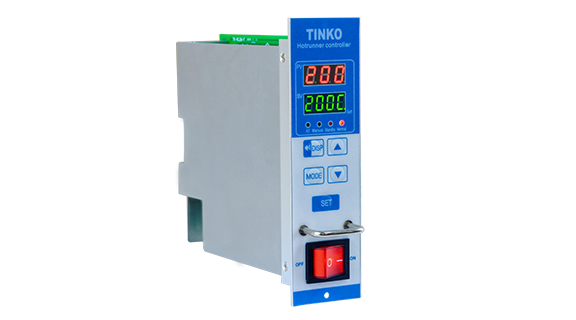
Tinko's controllers are engineered to support high-cavity molds with real-time temperature feedback and adaptive control loops. This allows manufacturers to maintain consistent part quality while optimizing cycle times and reducing scrap rates. As the hot runner temperature controller market evolves, automotive producers increasingly demand controllers with smart diagnostics and connectivity features that support Industry 4.0 initiatives.
Medical and healthcare industries impose rigorous standards on component quality due to the life-critical nature of many products. Items such as syringes, surgical instruments, and diagnostic device housings often rely on precision-injection molded plastics.
In this context, a hot runner temperature controller must not only deliver exact temperature regulation but also ensure repeatability over thousands of cycles. Minor temperature swings can affect polymer properties, potentially compromising biocompatibility or dimensional tolerances.
Tinko's temperature controllers are designed to meet these high standards. With advanced PID algorithms and rapid response sensors, they maintain stable temperatures even in multi-zone configurations. Additionally, features such as data logging and process traceability support compliance with global quality standards like ISO 13485. The growing hot runner temperature controller market reflects ongoing investments by medical manufacturers in technology that guarantees both quality and regulatory compliance.
As consumer electronics continue to miniaturize and innovate, the demand for finely detailed plastic components increases. Connectors, casings, button interfaces, and internal supports all depend on exact thermal management during molding to achieve precise features and thin walls.
In these high-speed production environments, a hot runner temperature controller must respond quickly and accurately to fast cycle demands. Even slight deviations in temperature can lead to blemishes, sink marks, or dimensional errors that compromise product fit and performance.
Tinko's controllers support rapid thermal cycling and offer customizable profiles for different materials, including high-performance engineering resins used in electronics housings. By optimizing temperature zones with precision control, manufacturers reduce rejects and increase throughput — a competitive advantage in a sector where time-to-market is critical. The hot runner temperature controller market continues to respond to these needs with more intelligent, adaptive systems.
The packaging and consumer goods industry is another major segment benefiting from hot runner technology. Products such as bottle caps, containers, and hygiene items are manufactured in high volumes, often with simple geometries that nonetheless require tight process control to avoid defects.
Here, the primary goals are efficiency and cost control. A custom hot runner controller enables manufacturers to minimize material waste, reduce cycle times, and lower energy consumption — all of which translate into lower per-unit costs.
Tinko's portfolio includes energy-optimized controllers with efficient power management and high-precision control loops that reduce overshoot and thermal lag. This results in lower operating costs and more predictable production schedules. With continued growth in consumer demand, the hot runner temperature controller market is expected to remain strong as producers pursue both performance and profitability.
From automotive and medical to electronics and consumer goods, the applications for hot runner temperature controllers span an impressive range of industries. As the hot runner temperature controller market expands, manufacturers must focus on solutions that deliver precision, stability, and efficiency to stay competitive.
Tinko stands out in this space by offering advanced temperature control systems that meet the demanding requirements of modern injection molding operations. Whether your priority is high cavity count production, regulatory compliance, or energy savings, choosing the right hot runner temperature controller can significantly enhance your manufacturing performance.
 English
 français
 Deutsch
 Español
 italiano
 русский
 português
 العربية
 Türkçe
 dansk
dansk Svenska