Choosing the right sequential valve gate controller starts with four practical questions: how many valve gates the mold has, how precisely each gate must be timed, whether the system is pneumatic or hydraulic, and what control or trigger modes the molding process requires.
For production molds, the controller should not be selected only by the maximum number of zones. A better choice is one that matches the actual valve sequence, machine signals, output requirements, and expected process adjustments.
The required controller zone count should normally correspond to the number of valve gates that need independent control. Each independently operated valve requires its own control channel so its opening and closing sequence can be adjusted separately.
For a simple mold with a limited number of gates, an 8-zone controller may be sufficient. Larger molds or applications with several sequential filling points require more channels and may benefit from a modular or expandable architecture.
Tinko currently offers different configurations for this purpose. The SVGC modular controller supports 1–24 zones, while the M20 is available in 6-, 12-, 18-, and 24-zone configurations. The D600 and D800 are designed as integrated 8-zone controllers.
When specifying a controller, it is also worth considering whether future molds may require additional zones. Selecting some practical expansion capacity can reduce the need to replace the controller when production requirements change.
Count the valve gates that must be controlled independently. If eight valve pins require separate timing, for example, an 8-zone system is normally the minimum practical configuration.
Timing determines when each gate opens and closes relative to the injection cycle. Small changes in gate timing can influence how the melt front advances through the cavity, which is why timing resolution becomes important when tuning complex molds.
A controller with finer resolution allows engineers to make smaller timing adjustments instead of changing the sequence in large increments.
Tinko's SVGC modular controller provides 0.1-second or 0.01-second timing resolution, while the D600 also supports these two settings. The D800 uses 0.1-second resolution, and the M20 provides selectable timing settings including 0.1 and 0.01 seconds.
Higher resolution is particularly useful when two gates need to operate within a narrow process window. However, finer timing alone does not guarantee better molding. Gate location, material behavior, injection speed, and actual actuator response still determine the final process result.
Yes. Sequential gating controls the progression of the melt front by opening and closing individual gates at selected stages of filling. Timing changes can therefore affect weld-line location, filling balance, and surface appearance.
Before selecting a sequential valve gate controller, confirm how the valve pins are actuated.
Pneumatic systems use compressed air to move the valve mechanism, while hydraulic systems use hydraulic pressure. The controller must provide an output that is compatible with the solenoid valves or control hardware used by the hot runner system.
Tinko's SVGC supports DC24V, AC220V, and relay-contact outputs and is designed for both pneumatic and hydraulic valve gate applications. It also provides automatic and manual control for individual gates.
Input compatibility is equally important. Many installations trigger the valve sequence from an injection-machine signal. Tinko's SVGC, D600, D800, and M20 support DC24V or relay-contact injection signals, allowing the controller to coordinate its programmed sequence with the molding cycle.
Control modes should be evaluated according to the process rather than simply choosing the controller with the most modes. For production, the important question is whether the available modes can reproduce the required opening, delay, holding, and closing logic for each gate.
Tinko offers several configurations for different mold and production requirements.
SVGC Modular Controller
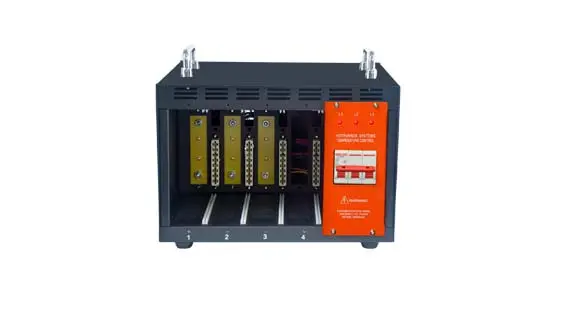
Suitable when flexible zone selection is important. It supports 1–24 zones, 0.1- or 0.01-second timing resolution, and both pneumatic and hydraulic valve gate systems. Its modular design also makes individual controller modules easier to replace.
D600 Wall Mounted Controller
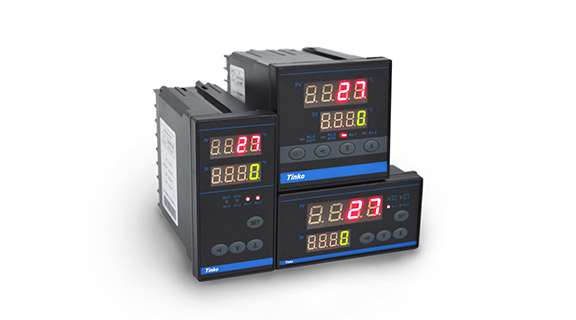
A practical choice for molds requiring up to eight sequential valve gates. It uses an LED interface and supports 0.1- or 0.01-second timing resolution.
D800 Wall Mounted Controller
Also designed for eight zones, but with a 7-inch LCD touch screen for operators who prefer a more visual interface. Its specified timing resolution is 0.1 seconds.
M20 Touch Screen Controller
Better suited to larger multi-gate molds or applications requiring a larger interface. Tinko offers 6-, 12-, 18-, and 24-zone versions with a 10-inch touch screen and multiple operating modes.
M10 Portable Valve Gate Controller
Designed around a compact aluminum structure and supports up to 24 valve gate control zones. It provides automatic/manual control and three control processes, making it suitable where portability and flexible configuration are important.
The best controller is therefore not necessarily the model with the highest zone count. It is the one whose zone capacity, timing resolution, signal interfaces, output type, and control logic match the actual mold.
Confirm the number of independently controlled gates, required timing accuracy, actuator type, injection-machine trigger signal, controller output, and installation format. These factors determine whether the controller can work correctly with the existing hot runner system.
No. A 0.1-second resolution may be sufficient for many applications. A finer 0.01-second setting is more useful when the process requires smaller adjustments between gate-opening events or when engineers are fine-tuning a narrow filling window.
Only if the controller and its output configuration are designed for both systems. Tinko's main sequential valve gate controller series include configurations for pneumatic and hydraulic applications.
Some spare capacity can be useful if additional gates or larger molds are expected in future production. However, significantly oversizing the controller may add unnecessary cost and complexity.
Provide the number of valve gates, pneumatic or hydraulic actuation type, required input and output signals, preferred timing resolution, and the intended gate sequence. With this information, Tinko can recommend a sequential valve gate controller configuration that is better matched to the molding system.
 English
 français
 Deutsch
 Español
 italiano
 русский
 português
 العربية
 Türkçe
 dansk
dansk Svenska